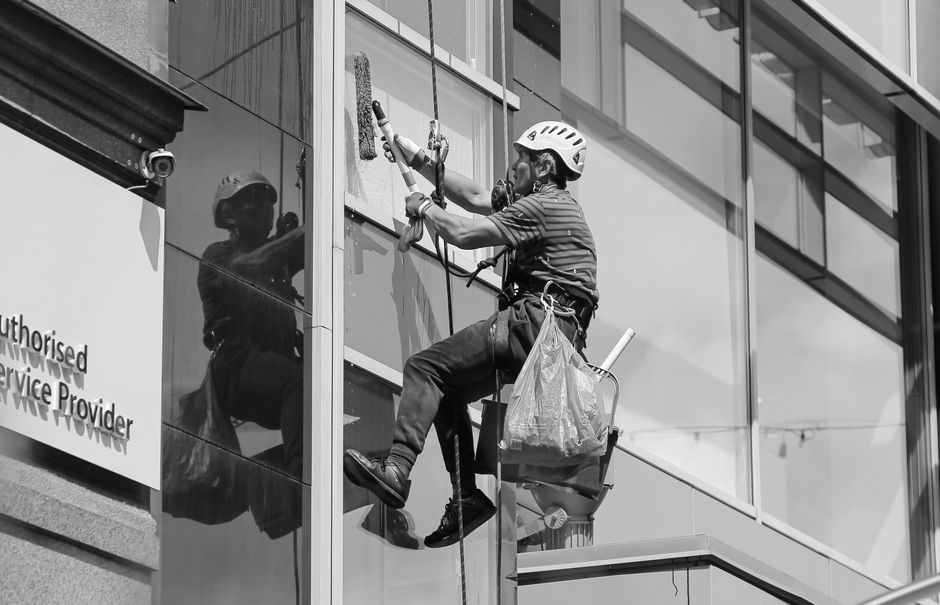
Haringey council permits for commercial cleaning jobs: what businesses need to know
If you are planning work that falls under Haringey council permits for commercial cleaning jobs, the first thing to understand is simple: not every cleaning job is just a cleaning job. Some projects touch public pavements, parking bays, access routes, waste handling, water use, or work at height. And once that happens, permits, notices, or council conditions can become part of the picture. It can feel a bit fiddly at first, to be fair, but getting it right saves time, avoids delays, and keeps the job looking professional from day one.
This guide breaks down how permits may apply, why they matter, what a cleaning business should check before booking work, and how to plan commercial cleaning in a way that is safe, tidy, and council-friendly. You will also find a practical checklist, a comparison table, and the common mistakes that trip teams up when they are busy and trying to move fast. Let's keep it plain English and useful.
Why Haringey council permits for commercial cleaning jobs Matters
Most commercial cleaning work in Haringey does not need dramatic paperwork. A routine office clean, for example, is usually just a matter of good scheduling, safe products, and a competent team. But the moment your job affects the public realm, the council's permit expectations can start to matter. Think of exterior window cleaning that needs pavement access, facade work that requires skip placement or controlled access, or after-builders cleaning where waste and loading arrangements need more careful planning.
Why does this matter so much? Because council permissions are not only about red tape. They help keep streets passable, protect pedestrians, reduce disruption to neighbouring businesses, and create a clear record of who is responsible if something goes wrong. A small job can become a messy one quickly if cones, hoses, ladders, or cleaning vehicles are placed without proper thought. And yes, people do notice. A neat setup gives a better impression than a rushed one, even before the actual cleaning starts.
In a busy borough like Haringey, where offices, shops, managed buildings, and residential blocks often sit close together, the margin for error is small. One blocked entrance or one poorly managed loading bay can set off a chain of complaints. That is why smart commercial cleaners treat permits and permissions as part of the job, not as an afterthought.
Practical takeaway: if your cleaning work may affect footpaths, road space, shared entrances, waste collection, or building access, treat permit planning as part of the quote stage, not the morning of the job.
For businesses that want a more reliable and professional setup, it helps to align the work with internal procedures too. Many operators build that around their health and safety policy and their insurance and safety information, because permit compliance and safe working really do go hand in hand.
How Haringey council permits for commercial cleaning jobs Works
Permit requirements depend on the nature of the work. There is no single one-size-fits-all answer, which is annoying, but true. In practice, you need to identify what part of the job interacts with council-controlled space or public safety. A straightforward indoor contract may need no council action at all. A pavement-adjacent clean, a late-night loading operation, or work that needs traffic management can be a different story.
The usual process starts with risk spotting. Ask: will staff need to work from the street, use external water sources, place equipment in a shared area, park for a long period, or place anything that narrows access? If the answer is yes, that job deserves a permit check. For commercial cleaners, that check often happens before the site visit is booked, because the site conditions shape the method statement, staffing, and timing.
Jobs commonly reviewed for permit-related issues include:
- window cleaning with pavement access or ladders
- facade cleaning on a street-facing property
- gutter cleaning from a public-facing position
- after-builders cleaning with skips, vans, or loading delays
- deep cleans in mixed-use premises with shared access routes
- communal area cleaning in managed blocks where residents still need safe passage
That does not mean every one of these needs the same permit. Far from it. Some may need only building permission or landlord sign-off. Others may require specific council approval for obstruction, parking, or work in the street. The important thing is to separate operational access from formal permission. People mix those up all the time. Easy mistake, expensive one.
When a job is being planned, commercial cleaners should also think about route management, waste disposal, water runoff, signage, timing, and communication with the client. If the task is part of a wider service package, it can be useful to tie it into a broader scope such as commercial cleaning, office cleaning, or communal area cleaning, because those services often involve shared access and coordination.
Key Benefits and Practical Advantages
Getting permit planning right may not feel glamorous, but it brings very real benefits. The biggest one is fewer last-minute surprises. If you have ever turned up to a site with a van full of equipment and discovered you cannot park where you expected, you will know exactly how annoying that is. It wastes time, burns fuel, and puts pressure on the team before the job has even started.
Here are the main advantages:
- Less disruption: permits and permissions help you plan around pedestrians, tenants, deliveries, and neighbouring businesses.
- Better safety: approved methods make it easier to manage ladders, hoses, wet floors, chemicals, and loading areas.
- Cleaner handovers: the client sees a team that has thought ahead, which is a nice confidence boost.
- Lower risk of fines or complaints: not every issue becomes a formal enforcement matter, but why invite the stress?
- Stronger quoting: when you understand permit needs early, your pricing is more accurate and less likely to be eaten by hidden costs.
There is also a reputational benefit. Commercial cleaning is a trust business. A building manager who sees a well-organised crew is more likely to book again. A team that arrives prepared, with the right documents and a sensible plan, looks competent from the off. That matters in Haringey, where many contracts are won on reliability as much as on price.
If your work also includes specialist tasks like commercial carpet cleaning, hard floor cleaning, or window cleaning, permit awareness helps you blend the technical job with the access and safety side. The cleaning may be the headline, but the logistics are what make it run smoothly.
Who This Is For and When It Makes Sense
This topic is most relevant for cleaning companies, facilities teams, landlords, block managers, builders' cleaners, and contractors who work on commercial or shared-use sites in Haringey. If your team only does small internal cleans in private office spaces, you may rarely need council involvement. But if your work crosses into the street, the building exterior, or shared access areas, this becomes much more relevant.
It also makes sense for anyone quoting for complex or multi-stage work. For example:
- a shop refit that ends with an after builders cleaning visit
- a rental block with regular regular cleaning and periodic deep cleans
- a hospitality site needing Airbnb cleaning between occupancy cycles
- an office move requiring end of tenancy cleaning and access coordination
Sometimes the need is obvious. A scaffold, a hose on the pavement, a van parked awkwardly outside a business park. Other times it is less obvious. A cleaner may simply need to move a bin store, pass through a communal lobby, or use a loading bay for forty minutes. Those details still matter. The safest approach is to ask early and document the answer.
If you manage a service contract, it also helps to choose a cleaning partner who already treats permissions as part of normal planning. A company with a clear about us page, sensible pricing and quotes, and transparent terms and conditions is usually easier to work with than one that improvises every job. Let's face it, improvisation is great for jazz, not for council-controlled work.
Step-by-Step Guidance
Here is a practical way to handle Haringey council permits for commercial cleaning jobs without overcomplicating it.
- Define the exact scope. Write down what the team will do, where it will happen, and whether any part touches public space, shared access, or external surfaces.
- Map the access route. Note parking, loading, pedestrian movement, bin locations, entrances, and any narrow areas. A job can look simple on paper and turn awkward on site.
- Check whether council permission may be needed. Focus on obstruction, parking, road use, access control, or any work affecting the public realm.
- Confirm building-side permissions too. Freeholder approval, managing agent sign-off, and tenant notice may be separate from council permissions.
- Prepare your documents. Risk assessment, method statement, insurance details, and any site notes should be ready before the start date.
- Build the permit time into the schedule. Do not assume you can book the crew and sort the permission later. That is usually how delays happen.
- Brief the team properly. Everyone should know where to park, where to unload, what to avoid, and who to speak to if something changes.
- Keep evidence. Save approvals, emails, and site instructions so you can refer back if a question comes up later.
A useful habit is to treat every new commercial site as if it might have a small hidden wrinkle. Maybe the access gate sticks. Maybe the loading bay is shared. Maybe the client forgot to mention a morning delivery. You do not need to be suspicious, just prepared. There is a difference.
If the job includes specialist cleaning, build that into the same workflow. A deep clean can be tied to deep cleaning, upholstery and soft furnishing work to upholstery cleaning, or stain-heavy areas to stain removal. The permit check stays the same; the equipment plan changes.
Expert Tips for Better Results
Here are a few habits that make a real difference in the field.
- Ask access questions during quoting. Not after the booking is confirmed. That one step reduces awkward surprises more than anything else.
- Separate public-space tasks from indoor tasks. A contract can contain both, but the permit risk is usually only attached to one part.
- Use simple site notes. A short note on where to park, how to enter, and who is on site at handover can save a lot of back-and-forth.
- Keep public safety front and centre. Wet floors, trailing hoses, and chemical storage are not just operational details. They are customer-facing risks.
- Think about timing carefully. Early mornings and quieter periods are often easier for loading, access, and noise management.
Another tip: write your job scope so that any permit-sensitive element is obvious at a glance. If the description is vague, people tend to assume things. And assumptions are where trouble starts. A site manager thinks the crew will use the rear entrance; the cleaner thinks they will use the front. Suddenly everyone is standing around with clipboards and mildly irritated faces.
Also, do not forget the boring stuff. Waste sacks, signage, PPE, absorbent materials, spill control, and the right insurance cover matter more than most new operators expect. A job can be technically excellent and still be a headache if the practical bits are missing.
Common Mistakes to Avoid
Most permit-related mistakes are not dramatic. They are small, rushed, and completely preventable. That is the frustrating bit.
- Leaving permission checks too late. By the time the crew is scheduled, changing access plans is much harder.
- Assuming building permission is the same as council permission. It is often not.
- Ignoring parking and loading issues. A van parked legally in one place may still create a site access problem.
- Forgetting neighbours and passers-by. Commercial cleaning can affect more than the client's unit.
- Not accounting for waste and water. Dirty water, debris, or packaging can create avoidable mess.
- Using the same process for every job. A routine office clean and a facade clean should not be treated as identical tasks.
One more thing: do not rely on memory for site rules. People remember the important stuff and then somehow forget the bit about the rear gate being locked after 3 pm. Happens all the time. Write it down. Your future self will thank you, probably with a sigh of relief.
Tools, Resources and Recommendations
You do not need a mountain of software to manage permit-related cleaning work well. A few reliable tools and documents are usually enough.
- Site survey template: use it to record access points, hazards, parking options, and public-space exposure.
- Method statement: keep one version for general commercial work and adapt it for higher-risk jobs.
- Risk assessment: update it when the environment changes, not just when a form says it is due.
- Job checklist: include parking, keys, water access, signage, and waste removal.
- Client handover note: useful for confirming what was done, what was left, and any access issues encountered.
If you want to present the business professionally, make sure the public-facing parts of the website are consistent too. A clear contact us page, honest pricing and quotes, and visible policy pages such as recycling and sustainability and payment and security help reassure cautious clients. People are oddly comforted by knowing the business has thought about the details. And honestly, they should be.
Law, Compliance, Standards, or Best Practice
Not every commercial cleaning job in Haringey will involve a formal council permit, but many jobs are affected by broader UK duties around health and safety, safe access, public protection, and responsible site management. The exact requirement depends on the task, the location, and how the work is carried out. So the safest position is to treat compliance as a planning exercise, not a box-ticking formality.
Best practice usually includes:
- making sure staff are trained for the task and the site conditions
- providing suitable PPE and cleaning equipment
- keeping walkways clear where possible
- separating public access from operational areas
- managing chemicals in line with the job's risk level
- checking insurance cover for the actual work being carried out
- keeping records of approvals, site instructions, and risk controls
For landlords, facilities managers, and commercial clients, this matters because a cleaner's method can affect your own responsibilities too. If you are organising the work, ask for the paperwork early. A competent contractor should be able to explain their process in a calm, ordinary way, not in a fog of jargon. If they cannot explain how they manage safety and permissions, that is a signal, and not a great one.
Where cleaning includes specialised exterior tasks such as facade cleaning or gutter cleaning, permit awareness and site controls become even more important because of height, access, and public-space issues. The job may still be perfectly manageable; it just needs better planning.
Options, Methods, or Comparison Table
Different commercial cleaning setups create different permit and access pressures. Here is a straightforward comparison.
| Job type | Likely permit pressure | Main planning concern | Typical risk if ignored |
|---|---|---|---|
| Indoor office clean | Low | Building access and keys | Minor delays, no formal issue |
| Shared-block communal cleaning | Medium | Resident access and timing | Complaints, blocked routes |
| Window cleaning with pavement setup | Medium to high | Public safety and obstruction | Access problems, enforcement risk |
| Facade or exterior wash | Medium to high | Equipment placement and runoff | Mess, unsafe working, delays |
| After-builders clean with loading needs | Medium | Parking, waste, traffic flow | Delayed start, poor site coordination |
The table is not meant to be rigid. It is a planning guide, nothing more. Real jobs vary. A low-risk indoor clean can become more complex if the site has tight access or unusual operating hours. Likewise, a large exterior clean may be straightforward if the building management has already agreed the setup and the timing works cleanly. A bit of common sense goes a long way here.
Case Study or Real-World Example
Picture a commercial cleaner booked to handle a mixed-use building in Haringey on a weekday morning. The work includes a ground-floor office clean, window cleaning, and a shared lobby refresh. Easy enough, right? Well, not quite. The office clean is entirely internal. The lobby is shared. The windows require equipment outside the building, and the street is busy around school drop-off time.
Instead of sending the team in cold, the contractor checks the access route the day before, confirms with the managing agent which entrance can be used, and asks whether any public-space restrictions apply. They also confirm the loading point, check whether the job needs to be split into quieter time windows, and ensure the crew has the right safety kit. No drama. Just good organisation.
On the day, the cleaner arrives, unloads quickly, keeps the public route clear, and finishes without complaints from residents. The client notices the difference immediately. Not because the windows are magically more sparkling than any other job, but because the whole thing felt controlled. Quietly professional. You know it when you see it.
That is the real value of understanding permit and access planning. The cleaning itself is only one part of the result. The experience around it is part of what customers pay for.
Practical Checklist
Use this checklist before any commercial cleaning job that may involve Haringey council permits or access considerations:
- Confirm the exact cleaning scope
- Identify whether the job touches public space or shared access
- Check parking, loading, and unloading arrangements
- Ask whether council permission or site approval may be needed
- Record contact details for the client or site manager
- Prepare risk assessment and method statement
- Check insurance and equipment suitability
- Brief the team on access routes and timing
- Plan waste removal and water management
- Keep approval emails, notes, and site instructions on file
If a job includes cleaning particular surfaces or furnishings, you can also map the checklist to service-specific work like carpet cleaning, oven cleaning, sofa cleaning, or mattress cleaning. That keeps the operational plan tight, which is exactly what you want when time is short.
Conclusion
Haringey council permits for commercial cleaning jobs are best understood as part of good job planning rather than an obstacle. Once you know where the public-space issues begin, it becomes much easier to decide whether you need permission, what documents to prepare, and how to schedule the work without stress. For most teams, the winning formula is simple: check early, document clearly, and keep the site safe and tidy.
That approach protects the business, reassures the client, and helps the job run the way it should. No last-minute panic. No awkward surprises. Just a clean, professional result and a crew that looks like it knows what it is doing. And that, in the real world, goes a long way.
Get a free quote today and see how much you can save.
Frequently Asked Questions
Do all commercial cleaning jobs in Haringey need a council permit?
No. Many indoor cleaning jobs do not need council involvement. Permits are more likely where work affects public space, access routes, parking, loading, or external surfaces.
What kinds of cleaning jobs are most likely to raise permit issues?
Jobs such as window cleaning from the street, facade cleaning, gutter work, communal area cleaning with shared access, and after-builders cleaning with parking or loading pressure are the ones to review first.
Is building permission the same as Haringey council permission?
Usually not. A landlord or managing agent may approve the job internally, but that does not automatically replace any council requirement connected to roads, pavements, or public obstruction.
How early should I check for permit requirements?
As early as possible, ideally during quoting. If you wait until the crew is booked, your options get narrower and you may have to change the schedule.
What documents should a commercial cleaner have ready?
A risk assessment, method statement, insurance details, site notes, and any written approvals are the most useful basics. For more complex work, a task-specific checklist helps too.
Can a small cleaning job still need permission?
Yes, sometimes. Size is not the only factor. A small job can still affect a narrow pavement, a shared doorway, or a busy loading area.
What happens if a cleaner starts work without checking permits?
It can lead to delays, complaints, access problems, or the need to stop work and re-plan. In some cases it may also create safety or insurance concerns.
How do permits affect pricing?
They can affect pricing if extra planning, site visits, waiting time, parking challenges, or additional labour are involved. That is why accurate quoting matters from the start.
Are permits more important for exterior cleaning than interior cleaning?
Usually yes. Exterior work more often interacts with public space, height, weather, access, and pedestrian safety. Interior work can still need planning, but the permit pressure is often lower.
Should commercial cleaners coordinate with the client about permits?
Absolutely. The cleaner may lead the process, but the client often controls building access or can confirm site rules. Good coordination avoids crossed wires and wasted visits.
What is the safest way to manage uncertainty?
Ask clear questions, document the answers, and avoid guessing. If a site feels borderline, treat it as a planning issue and check before booking the team in.
Where do service pages fit into this kind of planning?
They help you match the right cleaning method to the site. Services such as office cleaning, deep cleaning, and window cleaning often require different access and safety considerations, so the service choice matters.